
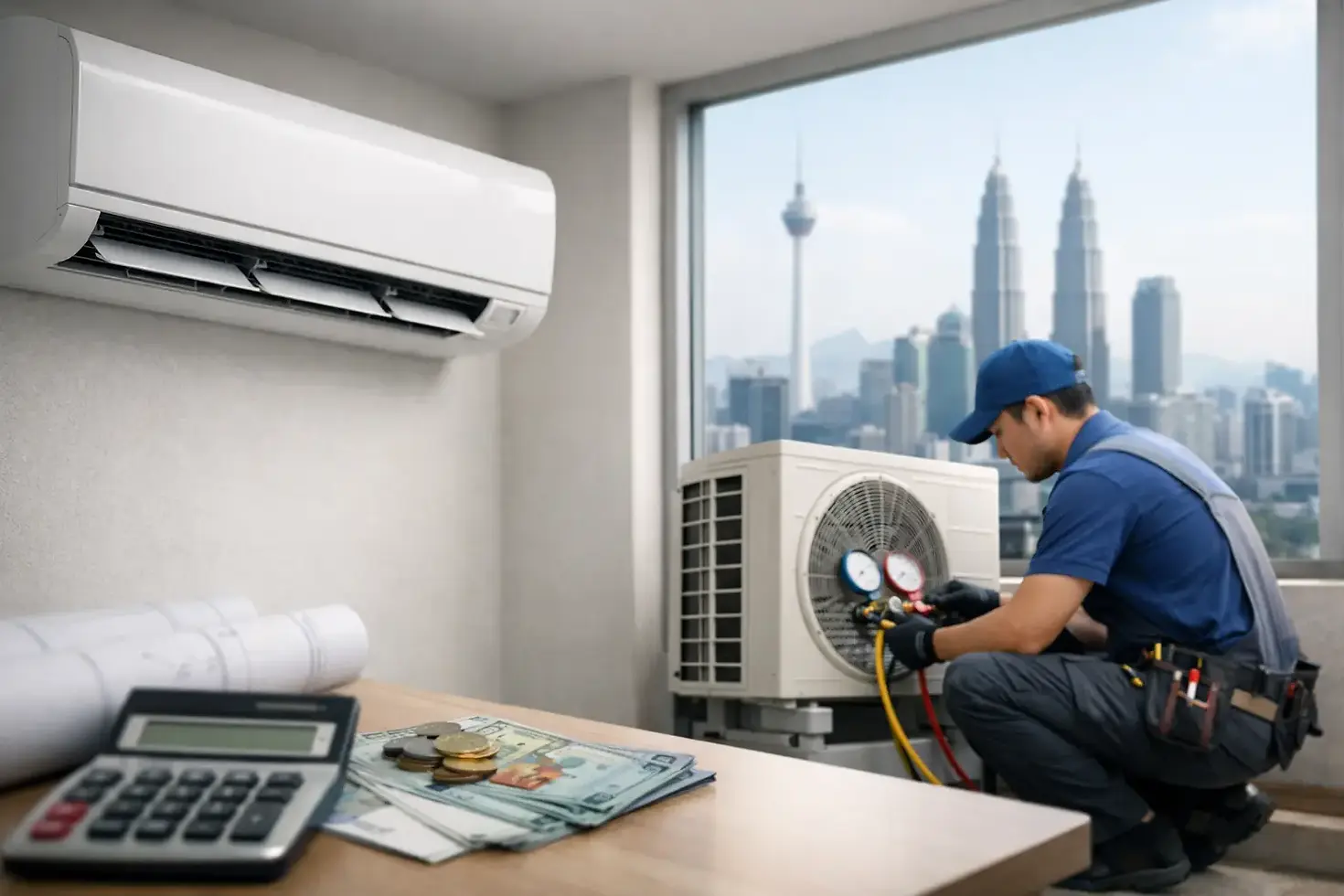
How Much to Install Air Conditioning in KL?

A new air conditioner can look straightforward on paper: choose a unit, mount it, switch it on, and enjoy a cooler room. In practice, when customers ask how much to install air conditioning, the honest answer depends on the condition of the property, the unit selected, and the work needed to make the system safe, efficient, and durable.
For homeowners and businesses in Kuala Lumpur and Selangor, installation cost should cover more than getting cold air on the first day. Proper sizing, secure mounting, correct piping, drainage, electrical protection, and performance testing all affect how reliably the system will run over the years ahead.
How Much to Install Air Conditioning in KL?
The installation price for a standard wall-mounted split air conditioner is usually lower when the indoor and outdoor units can be placed close together, the building has suitable electrical points, and existing piping can be reused safely. Costs rise when the job requires longer copper piping, concealed trunking, new wiring, wall drilling through concrete, high-rise access, or additional drainage work.
That is why two rooms with the same horsepower air conditioner may have very different installation quotes. A simple bedroom installation on a ground-floor home is not the same as fitting a unit in a high-rise condominium, a shop lot, or an office with a distant outdoor condenser location.
A transparent quotation should separate the cost of the air-conditioning unit from the labor and materials required for installation. This helps you see whether you are paying for standard installation only or for necessary upgrades that protect system performance.
What Is Usually Included in Standard Installation?
Standard installation commonly covers mounting the indoor and outdoor units, a basic length of copper piping and insulation, communication cable, drainage piping, wall brackets or a condenser base where applicable, vacuuming the system, and initial testing. The technician should check for leaks, confirm drainage flow, test electrical operation, and make sure the unit is cooling properly before the job is completed.
The exact materials included vary between providers and promotions, so it is wise to ask for the allowed piping length, cable length, and drainage length before confirming the work. A low advertised price can be reasonable for a basic setup, but it may not include the materials your specific property needs.
Professional installation is not just about appearances. Copper piping needs correct sizing and insulation to reduce energy loss and prevent condensation. The drain line needs enough fall to carry water away without leaking into a wall or ceiling. Electrical connections need to be secure and suitable for the unit's load. Skipping these details can lead to water leaks, weak cooling, higher electricity bills, or premature compressor problems.
The Main Factors That Affect Installation Cost
Air conditioner type and capacity
A small 1.0 HP bedroom unit is generally simpler to install than a larger 2.5 HP system for an open living area. Larger-capacity units may require thicker piping, stronger electrical support, and more careful planning for the outdoor unit.
The system type matters too. A standard wall-mounted split unit is usually more affordable to install than a cassette, ceiling-concealed, multi-split, or commercial system. These larger or more complex systems often need ceiling work, longer pipe routes, condensate pumps, or coordinated installation around business operating hours.
Distance between indoor and outdoor units
Piping length is one of the biggest cost variables. The farther the condenser sits from the indoor unit, the more copper pipe, insulation, cable, and drain piping are needed. Long runs may also require additional refrigerant according to the manufacturer’s specifications.
It can be tempting to place the outdoor unit wherever there is space, but the shortest practical route is often the most cost-effective and energy-efficient choice. A qualified technician can recommend a location with good airflow, service access, and a sensible pipe route.
New piping, concealed piping, or replacement work
Replacing an old air conditioner does not always mean the existing pipes can be reused. Old piping may be the wrong size for the new unit, damaged, poorly insulated, or contaminated with incompatible refrigerant oil. Reusing unsuitable pipes can compromise cooling performance and may affect manufacturer warranty requirements.
Concealed piping creates a cleaner finish but usually costs more than surface trunking because it may involve opening and repairing walls or ceilings. For renovated homes, discussing air-conditioning pipe routes before painting, cabinetry, or plaster ceiling work begins can prevent expensive changes later.
Electrical upgrades
Some properties need a dedicated circuit, isolator switch, new cabling, or circuit breaker upgrade before a new air conditioner can be installed safely. This is especially common in older homes, properties with several air conditioners, and commercial spaces with high electrical demand.
Electrical work should never be treated as an optional extra. An air conditioner that trips frequently, has unstable power supply, or shares an overloaded circuit will not provide dependable comfort. Clear electrical recommendations protect both the equipment and the people using the space.
Access and mounting conditions
High-rise condominiums, upper-floor homes, narrow side passages, and restricted outdoor ledges can add labor and safety requirements. The outdoor unit must be mounted securely with enough space for ventilation and future servicing.
Concrete walls, tiled surfaces, thick structural beams, and difficult drilling conditions may also affect the cost. In some condominiums, management approval and designated condenser locations must be followed before installation begins. Checking these rules early avoids delays on installation day.
Why the Cheapest Quote Can Cost More Later
Price matters, but installation quality has a direct effect on comfort and operating costs. A system that is not properly vacuumed can retain moisture and air in the refrigerant line, reducing efficiency and increasing wear. Poor insulation can cause condensation and water stains. Incorrect drainage can turn a cool bedroom into a ceiling repair project.
A reliable installer should explain what is included, identify any extra work before proceeding, and test the unit after installation. You should not be left guessing whether the refrigerant pressure, drainage, electrical connection, and cooling output were checked.
For businesses, the risk is even greater. A poorly planned installation can disrupt customers, staff, stock, and daily operations. Investing in the right setup from the beginning is usually less disruptive than arranging urgent repairs after opening hours.
How to Get an Accurate Air Conditioning Installation Quote
The best quote starts with practical information. Share the room size, ceiling height, window exposure, number of people using the area, and the intended use of the space. A sunny living room, a bedroom, and a server room do not have the same cooling needs, even if they are similar in size.
Photos of the proposed indoor and outdoor locations can help, but an on-site assessment is often the clearest way to identify access limits, pipe routing, drainage options, and electrical requirements. Ask whether the quote includes the air-conditioning unit, standard materials, installation labor, testing, old-unit removal, and any warranty coverage for workmanship.
It also helps to ask what may create additional charges. Common examples include extra piping, additional wiring, wall brackets, concealed piping work, high-rise access, electrical upgrades, and drainage pumps. Clear answers make it easier to compare quotations fairly instead of comparing one low starting price with another all-inclusive proposal.
Choose the Right Unit Before Paying for Installation
Installing an oversized unit may cool a room quickly but cycle on and off too often, wasting energy and reducing comfort. An undersized unit may run continuously without reaching the desired temperature. The right capacity depends on room dimensions, heat from windows, insulation, occupancy, appliances, and how the room is used.
Energy-efficient inverter models can cost more upfront, but they may reduce electricity use when selected and installed correctly. For homes that run air conditioning every night or businesses that operate long hours, this long-term saving can be more meaningful than choosing the lowest initial equipment price.
A complete provider such as One Stop 88 Solution Service can help match the unit, installation approach, and maintenance plan to the property rather than treating each stage as a separate problem.
Plan for Maintenance From Day One
Installation is the beginning of your air conditioner’s service life, not the end of it. Regular servicing every three to six months helps keep filters, evaporator coils, condenser coils, drainage lines, and electrical components in working order. The right interval depends on usage, dust levels, pets, cooking activity, and commercial operating hours.
Routine maintenance can catch minor drainage issues, dirty coils, loose connections, and refrigerant concerns before they become a no-cooling emergency. It also gives technicians a chance to check that the unit continues to perform as expected after installation.
The right installation quote should give you confidence, not confusion. Choose a team that explains the work clearly, recommends only what the property needs, and leaves you with a system built to keep your home or business comfortably cool when you need it most.


Comments