
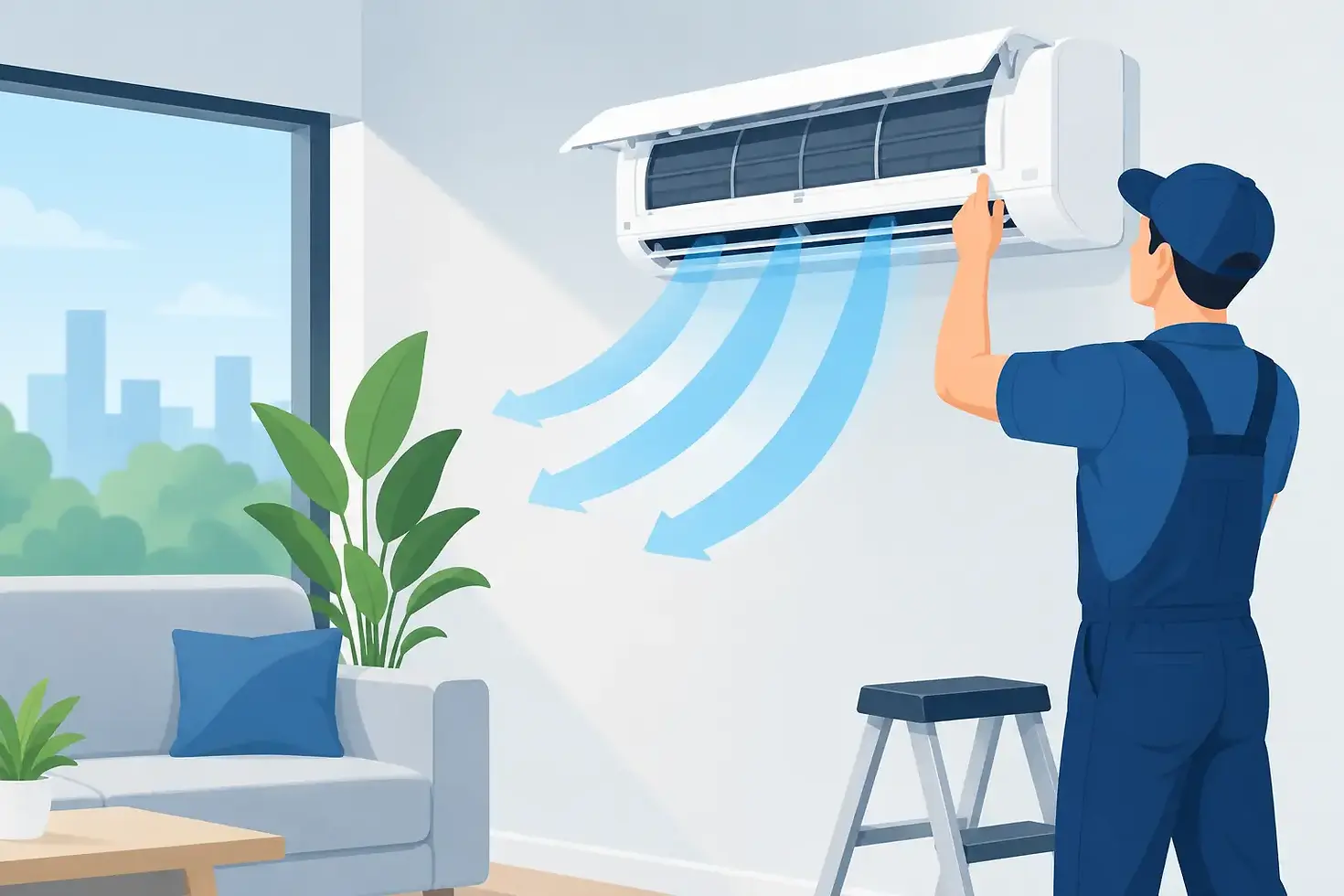
How to Fix Common Aircon Airflow Problems

A room can feel warm even when the air conditioner is running nonstop. Weak air from the vents, uneven cooling, and a unit that takes too long to cool are common aircon airflow problems. Left unresolved, they can raise energy use, reduce comfort, and place unnecessary strain on components that are more expensive to repair.
For homeowners, landlords, and business operators, the first step is knowing whether the issue is a simple maintenance need or a sign of a deeper fault. Some checks are safe to handle yourself. Others require a certified technician who can test the system properly and explain the repair clearly.
What Weak Airflow Usually Means
Airflow and cooling are related, but they are not the same thing. If air is blowing strongly but feels warm, refrigerant level, compressor performance, or thermostat settings may be the concern. If the air is cool but barely reaches the room, the problem is more likely connected to filters, the indoor blower, the evaporator coil, or air distribution.
In Kuala Lumpur and Selangor, air conditioners often work hard through long, humid periods. Dust, moisture, cooking residue, pet hair, and everyday use can build up faster than many people expect. A system that was fine a few months ago may gradually lose airflow without showing an obvious warning sign.
Common Causes of Aircon Airflow Problems
A clogged air filter
A dirty filter is one of the most common causes of weak airflow. It restricts the air entering the indoor unit, forcing the system to work harder to circulate cooled air. You may notice reduced air from every vent, longer cooling times, more dust around the room, or a higher electricity bill.
Washable filters should be cleaned according to the manufacturer’s instructions and fully dried before being reinstalled. In a busy household or small business, this may be needed more frequently than expected. However, cleaning the filter alone will not solve every airflow issue. If it becomes dirty again quickly, the indoor coil or blower may also need professional cleaning.
Dirt on the evaporator coil or blower wheel
Behind the filter, the evaporator coil and blower components handle the air that moves through your unit. Over time, fine dust can stick to damp coil surfaces. The blower wheel can also collect grime that reduces its ability to push air effectively.
This is not always visible from outside the unit. A quick surface wipe may make the air conditioner look clean while buildup remains inside. Professional servicing typically includes careful cleaning of these areas, along with a performance check, so airflow can be restored without damaging delicate fins or electrical parts.
Blocked or closed vents
Furniture, curtains, storage boxes, and display fixtures can block the path of conditioned air. In offices and retail spaces, rearranged furniture is a surprisingly common reason one area becomes stuffy while another feels too cold.
Check that supply vents are open and clear. If a room has several vents, avoid closing most of them to force air into one area. Restricting too many outlets can increase pressure in the system and may create new comfort problems elsewhere.
Incorrect fan settings
Before assuming there is a fault, check the remote control settings. Fan speed may be set to low, sleep mode may be active, or the system may be operating in a mode that prioritizes energy saving over fast air circulation.
Set the unit to cooling mode and try a medium or high fan setting for several minutes. If airflow remains weak at every speed, the issue is unlikely to be only a setting. If the fan responds normally but cooling is uneven, installation position or room conditions may be contributing factors.
Frozen indoor coil
A frozen evaporator coil can severely reduce airflow. Ice may form when airflow is restricted, when refrigerant is low, or when there is a mechanical issue affecting the cooling cycle. You may see water dripping after the unit is turned off, notice frost inside the unit, or feel that airflow slowly declines during operation.
Turn the air conditioner off if you suspect ice buildup and allow it to thaw. Do not chip ice away with sharp objects, as this can damage the coil. A technician should identify why the coil froze before the unit is used normally again. Simply restarting it can lead to the same issue and potentially more water leakage.
Blower motor or capacitor problems
The indoor blower motor drives air through the unit. If it is weakening, its capacitor is failing, or its control board is malfunctioning, the fan may run slowly, start and stop unpredictably, or make unusual humming and rattling sounds.
These faults need professional diagnosis. Electrical testing and component replacement should not be treated as a do-it-yourself repair. A qualified technician can determine whether a repair is practical or whether an older unit is reaching the point where replacement offers better reliability and energy efficiency.
Duct, piping, or installation issues
For ducted systems, damaged or disconnected ductwork can allow cooled air to escape before it reaches the room. In split-unit systems, airflow complaints may be caused by poor indoor-unit placement, an undersized unit, or an installation that does not suit the layout of the space.
This is where the answer depends on the property. A small bedroom with direct sunlight may need different capacity and positioning than a shaded office or open-plan shop. Adding a larger unit is not automatically the best fix. Correct sizing, insulation, airflow direction, and room use all matter.
Safe Checks You Can Make First
Start with the simple items: confirm the thermostat setting, select a higher fan speed, and make sure nothing is blocking the indoor unit or vents. Remove and inspect the filter if your model allows it. If it is visibly dusty, clean it correctly and let it dry completely.
Also look for warning signs around the unit. Water stains, persistent dripping, ice, burning smells, loud mechanical noise, or repeated tripping of a breaker should not be ignored. Turn the system off if there is an electrical smell, significant leaking, or unusual noise, then arrange a professional inspection.
Avoid opening electrical panels, adding refrigerant yourself, or using harsh chemical cleaners inside the unit. Refrigerant service requires the right tools and knowledge, and incorrect handling can affect performance, safety, and the lifespan of the system.
When Professional Aircon Service Is the Right Call
Book a service visit when cleaning the filter does not restore airflow, when the problem returns quickly, or when one room remains uncomfortable despite normal settings. A thorough inspection should look beyond the visible filter. It may include checking the indoor coil, blower, drainage, refrigerant condition, electrical connections, fan operation, and overall cooling performance.
For rental properties and businesses, prompt attention helps prevent complaints, downtime, and larger repair costs. A unit that is struggling to move air may run for longer cycles, which wastes energy even before it fails completely. Clear diagnosis also matters: you should know what is causing the issue, what work is recommended, and what the expected cost is before repairs begin.
One Stop 88 Solution Service provides end-to-end support for air conditioner servicing, repair, installation, and maintenance across Greater Kuala Lumpur and Selangor. Whether the answer is a detailed cleaning, a component repair, or advice on a more suitable replacement unit, the goal should be dependable cooling rather than a temporary patch.
Preventing Poor Airflow Before It Starts
Routine maintenance is the most practical way to prevent many airflow concerns. For most homes and small commercial spaces, servicing every three to six months is a sensible starting point. The ideal schedule depends on how often the system runs, the number of occupants, indoor dust levels, pets, nearby construction, and whether the space is open to cooking fumes or street traffic.
Between professional visits, keep filters clean, leave adequate clearance around indoor and outdoor units, and pay attention to changes in noise or cooling time. Small changes are easier and more affordable to address before they become a complete breakdown.
Comfort should not depend on turning the temperature lower and hoping the room catches up. When air moves freely and the system is properly maintained, your air conditioner can cool the space more evenly, use energy more efficiently, and give you greater confidence on the hottest days.


Comments